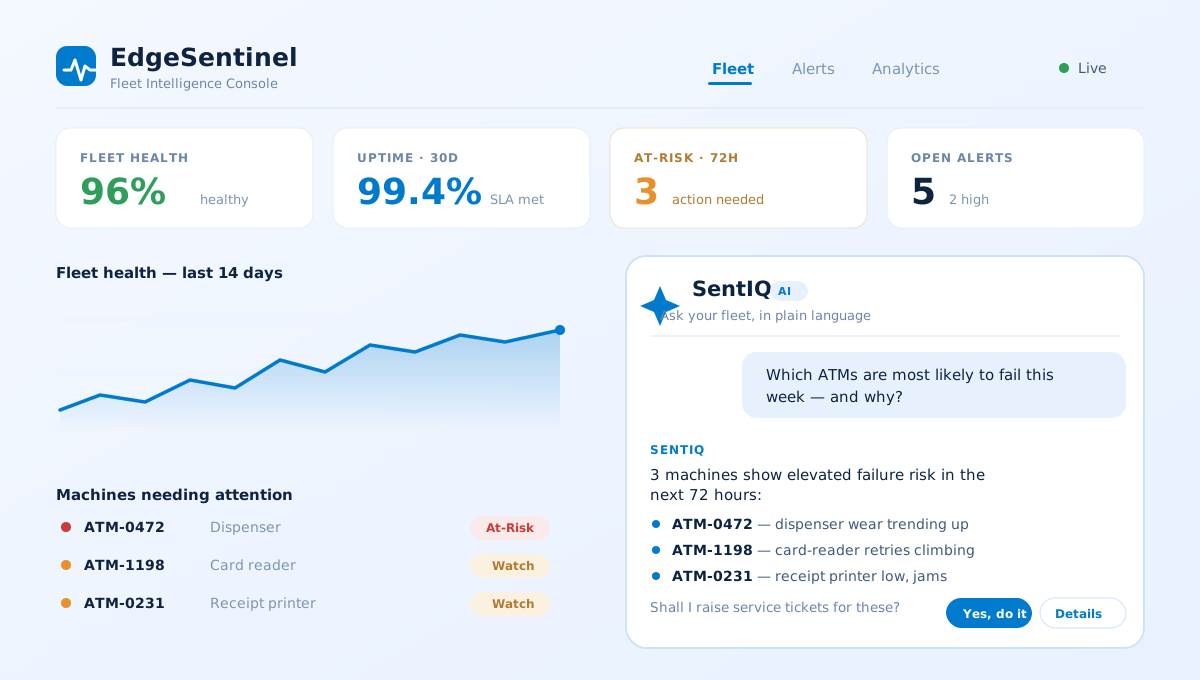
Most banks are not short of ATM data. Between device telemetry, transaction logs and monitoring tools, there's more than enough to know what's happening across the fleet. The problem is getting an answer out of it — because the person who needs the answer is usually a branch-operations manager or a service coordinator, not a data analyst fluent in dashboards and query builders.
Natural-language analytics closes that gap. Instead of learning where to click, you ask. SentIQ — the analytics layer over EdgeSentinel — lets anyone on the operations team ask about the fleet in plain language and get a straight, grounded answer back.
What "ask your fleet" actually means
It's exactly what it sounds like. You ask a question the way you'd ask a colleague — "which ATMs are most likely to fail this week, and why?" — and SentIQ answers with the specific machines, ranked by risk, each with a one-line reason. No query language, no export to a spreadsheet, no waiting on an analyst to build a report.
Grounded in your data — not a generic model
This is the important part, and it's what separates useful fleet analytics from a novelty chatbot. SentIQ's answers are drawn from your fleet's own live telemetry through EdgeSentinel — the same signals that drive its 72-hour failure predictions. So the answer isn't a plausible-sounding generality; it's specific to your machines, and it comes with reasons: this dispenser is trending toward wear, that card reader is retrying more often. When SentIQ can't ground an answer in the data, it says so rather than inventing one.
From an answer to an action
An analytics tool that only produces insight still leaves someone to act on it. SentIQ is built to close that loop: alongside the answer it offers the next step — prioritise these machines, raise service tickets for the ones at risk — so the path from "what's wrong" to "it's handled" is a single conversation rather than a chain of hand-offs between teams.
Built for banking: air-gapped and on-premise
Fleet telemetry is sensitive, and many banks — particularly under data-localisation rules — can't send it to an external cloud service. SentIQ is designed to run entirely inside the bank's own perimeter, air-gapped where required. The natural-language querying works without fleet data ever leaving your environment, which is what makes it deployable in security-conscious and regulated banking estates in the first place.
Why it matters
The effect is quiet but significant: it puts analyst-grade answers in the hands of the people who actually run the machines. A branch-operations manager who would never open a BI tool can ask a question and get ahead of a failure in seconds. Intelligence stops being something a small central team produces in weekly reports and becomes something the whole operation can simply ask for.
The bottom line
Prediction tells you what's likely to happen. Natural-language analytics makes that prediction usable by everyone, not just the data team — grounded in your own telemetry, ready to act on, and running inside your own walls. That's the point of SentIQ: not another dashboard to learn, but a fleet you can simply ask.