A lot of "modern" ATM interfaces are, under the hood, a web browser running full-screen in a locked-down box. It's an understandable shortcut — web skills are everywhere, and a browser renders a slick screen quickly. But an unattended cash machine is not a website, and treating it like one carries real costs.
The browser is a large, moving attack surface
Every browser engine carries a steady stream of security advisories — that's simply the nature of software as complex as a modern web engine. On a laptop you patch and move on. On a fleet of unattended machines that dispense cash and handle cardholder data, that same churn becomes a liability: each new browser vulnerability is a new exposure, and every browser update is another full round of regression testing before it can be trusted in the field.
A native, non-browser platform removes that entire class of risk. The application runs directly within the ATM's controlled, native environment — closer to the hardware and the XFS device layer, with a smaller and more predictable attack surface, and without inheriting the vulnerabilities of a general-purpose web engine.
One platform, three operating systems
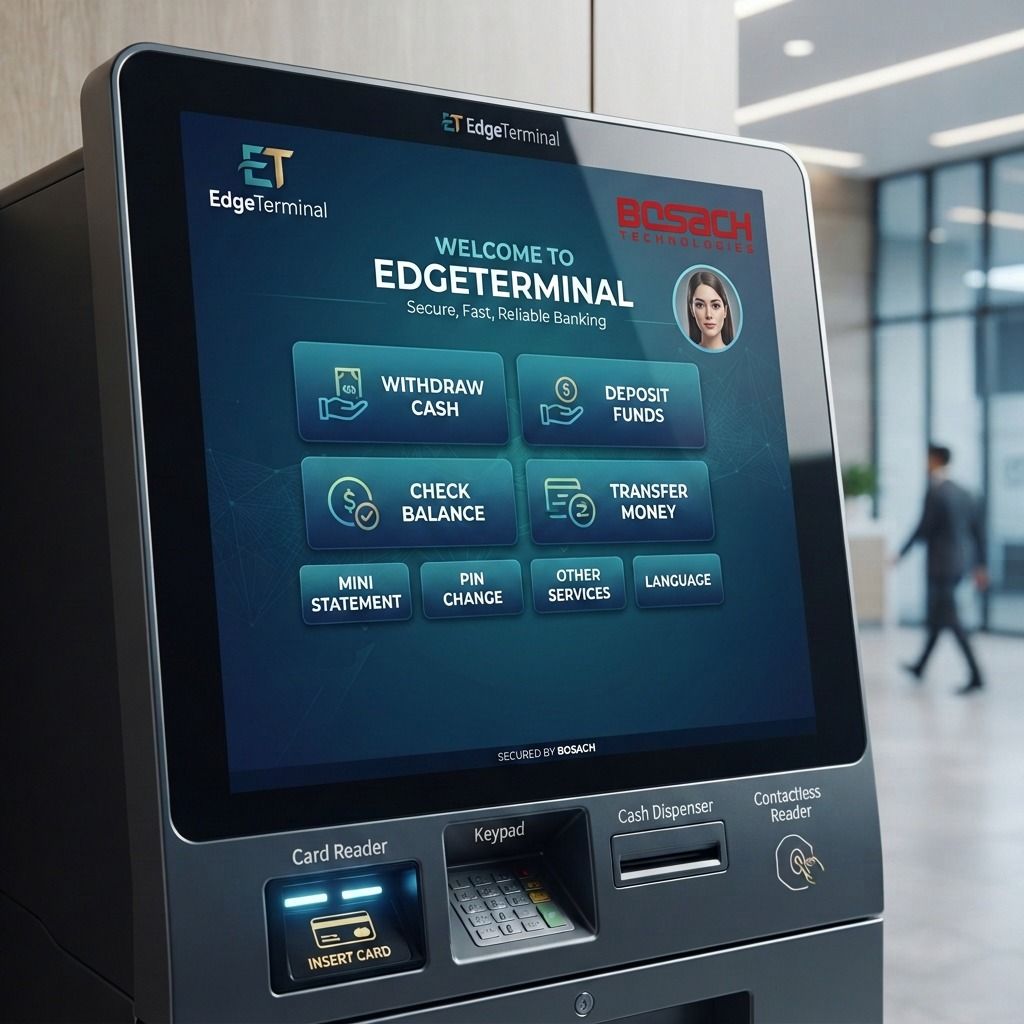
The ATM world is in the middle of a slow, expensive migration. Estates are moving off end-of-life Windows for cost and security reasons — many toward Linux — while Android-based ATMs are emerging as a genuine third option. For a bank, that transition can take years and span mixed hardware.
The worst outcome is rewriting your customer application three times, once per operating system, and then maintaining three divergent codebases forever. A platform built to run the same application across Windows, Linux and Android turns that migration from a rewrite into a redeploy: you author the customer journey once and run it everywhere, and the OS underneath becomes a deployment detail rather than a project in its own right. It also protects the software investment — whatever the estate eventually standardises on, the application comes along for the ride.

Beyond transactions — a place to build experiences
Once the ATM has a real application platform rather than a browser, it can do more than move cash. Two capabilities are ready to run on it today, available for demo and PoC:
- EdgeStudio — a visual authoring studio that lets teams build and manage ATM screen journeys and on-screen content without hand-coding every screen, so changes ship in days rather than development cycles.
- EdgeCampaign — a consent-aware customer-engagement module that delivers relevant, permission-based messages and offers within the transaction journey, respecting customer consent rather than bolting on generic advertising.
Together they turn the ATM screen from a fixed menu into a managed, measurable customer surface — something a browser-in-a-box was never built to be. Both are available today for demo and PoC.
Voice and accessibility, built in
Because the platform owns the full journey, accessibility isn't an afterthought. Interactive voice — speech recognition paired with text-to-speech — drives hands-free, eyes-free transactions in the customer's own language as a native capability of the platform, not a bolt-on.
The bottom line
A cash machine deserves a real, secure, native platform: one that shrinks the attack surface by leaving the browser behind, runs unchanged across Windows, Linux and Android so your software survives the hardware transition, and gives you a place to build and deliver customer experiences — not just a screen that happens to render HTML.