Every ATM operator lives with the same quiet tax: an ATM that is down is an ATM that isn't dispensing cash, isn't serving customers, and — in a shared or brownfield estate — is generating support tickets and truck rolls instead of revenue. The question isn't whether to maintain the fleet. It's when.
For decades there have been only two answers, and both are expensive in opposite ways.
The two traditional models — and why both leak money
Break-fix waits for something to fail, then dispatches an engineer. It feels efficient because you only pay when there's a problem, but the real cost is hidden: unplanned downtime during peak hours, emergency call-out premiums, second visits when the right part wasn't on the van, and the customer who walked to a competitor's machine and didn't come back.
Scheduled (preventive) maintenance swings the other way. You service every machine on a fixed calendar whether it needs it or not. That over-maintains healthy ATMs, consumes engineer time on machines that were fine, and still misses the faults that don't respect your schedule — a card reader that degrades three weeks after its last service, a dispenser that starts jamming the day after the technician left.
Both models share a blind spot: they act on the calendar or on failure, not on the actual condition of the machine.
What predictive maintenance actually changes
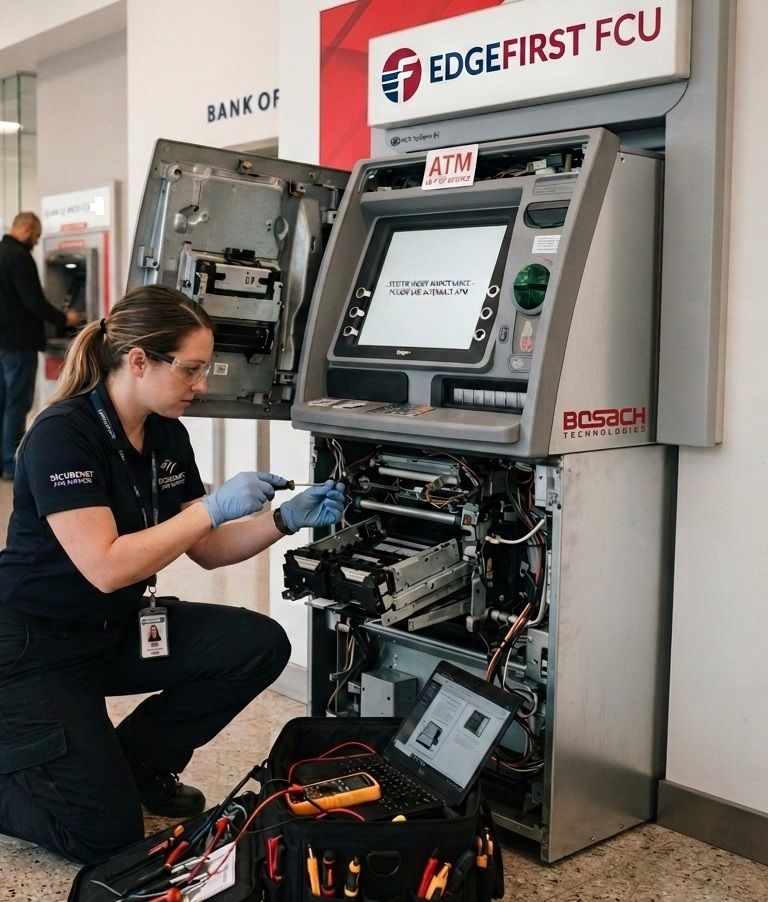
Predictive maintenance replaces "when did we last service it?" with "what is this specific machine telling us right now?" Modern ATMs are noisy in a useful way — every dispense, retract, card read, error code, reboot and temperature reading is a signal. Individually these are just log lines. Taken together, over time, and per machine, they form a behavioural baseline. When a machine starts drifting from its own normal — more retries here, a slower dispense there, a creeping error rate — that drift often shows up well before an outright failure.
The shift in practice looks like this:
- From reactive to planned. A flagged machine can be serviced in a scheduled window with the right part on hand — not at 6pm on a Friday during peak footfall.
- From fleet-wide to targeted. Engineer time goes to the machines that actually need attention, not to a calendar that treats every ATM the same.
- From guesswork to evidence. "This reader is trending toward failure" is a very different conversation with a vendor than "it broke again."
Why "per-machine" matters more than "fleet average"
A common mistake is to set one threshold across the whole estate. But a machine in a dusty rural kiosk behaves nothing like one in an air-conditioned bank lobby, and a high-throughput site will always show more wear signals than a quiet one. Effective prediction learns each machine's own normal and watches for deviation from that — otherwise you drown in false alarms from busy sites and miss quiet ones sliding toward failure.
From prediction to plain-language answers: SentIQ
A prediction is only worth something if the people running the fleet can act on it — and most of them are branch-operations managers, not data analysts. That's the job of SentIQ, the natural-language layer that sits over EdgeSentinel. Instead of building a dashboard query or exporting a spreadsheet, an operator can simply ask — "Which ATMs are most likely to fail this week, and why?" — and get a straight, grounded answer, with the option to act on it right there.
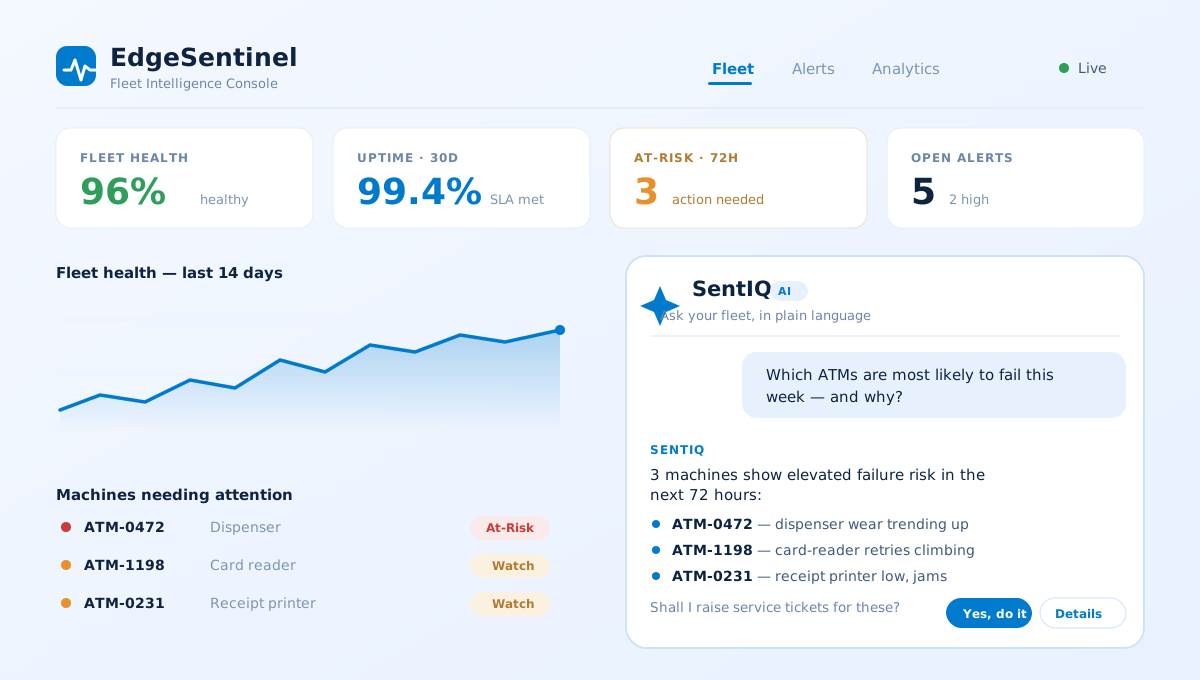
Because the answer is drawn from the fleet's own live telemetry rather than a generic model, it comes with reasons, not just a score: this dispenser is trending toward wear, that card reader is retrying more often. SentIQ ranks the machines that need attention, explains the "why" in a line each, and offers to raise the service tickets — turning a wall of metrics into a decision an operator can make in seconds. And for air-gapped or on-premise banking environments, it runs entirely inside the bank's own perimeter.
The honest caveats
Predictive maintenance isn't magic, and it's worth being clear-eyed. It needs enough clean telemetry to learn from, it works best when the insight lands in the hands of someone who can act on it (an ITSM ticket, not a dashboard nobody watches), and no model catches everything — sudden hardware death and vandalism don't announce themselves. The goal isn't perfection; it's shifting a meaningful share of failures from "unplanned and expensive" to "planned and cheap."
The bottom line
For a bank or ATM deployer, the maths is simple: fewer unplanned outages, fewer wasted truck rolls, better customer availability, and a maintenance budget aimed at the machines that need it. As estates grow and margins tighten, "predict-fix" is quietly becoming the default operating model for serious operators — and the technology to do it now runs at the edge, on the ATMs you already have.